How We Work
The 8 phases
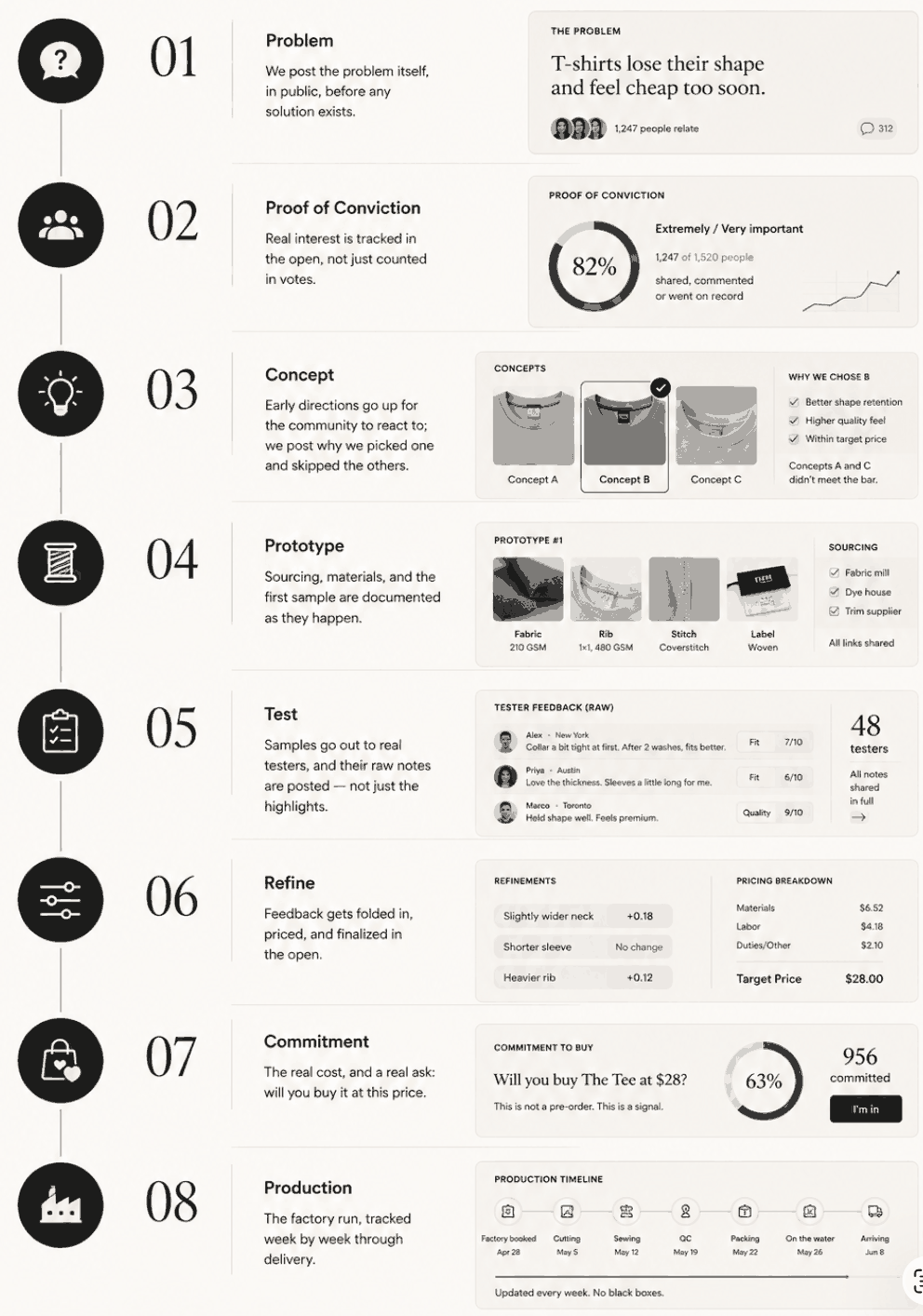
Who does what
Why ID Projects instead of crowdfunding
Crowdfunding validates an idea and takes a payment — the creator handles everything else, which is why fulfillment complaints are so common there. ID Projects keeps building and iterating happening on the platform itself: proposing, concepting, prototyping, and testing all take place here, in the open, before you’re ever asked to commit money.
Crowdfunding can’t easily bolt this on. Platform-neutrality is core to what it does — it hosts creation for millions of unrelated projects. Retained curation, where one team makes the design and manufacturing calls across every product, is a different posture: it means being one opinionated product company, not neutral infrastructure. That’s a structural difference, not just a missing feature.
Can I get the same product again later?
Each production run is sized to what actually got committed during the Commitment phase — not a speculative guess, and not open-ended restocking. We can’t promise the same product comes back around for a second run.
What we can promise: the platform doesn’t stop at delivery. There’s always a next problem in the queue, and the same community process starts again.
What happens to problems that don’t get picked?
Most ideas people have about a product that’s missing, or badly done, get shelved — not because they’re bad ideas, but because turning one into an actual product isn’t something any one person knows how to do alone. Bringing it to ID Projects doesn’t guarantee it becomes a product. It does guarantee it goes through a real process — posted, discussed, and either taken forward or turned down with a stated reason. “Why we said no” write-ups are part of the documentation, same as everything else.